
Gloo / Applied solutions

See how Gloo works in an operation.

Explore an agent-monitored dispatch and interactive models for slotting, picking and replenishment. Gloo combines data, analysis and actions with your systems.

People and systems connected around a logistics operation

Gloo in an operation

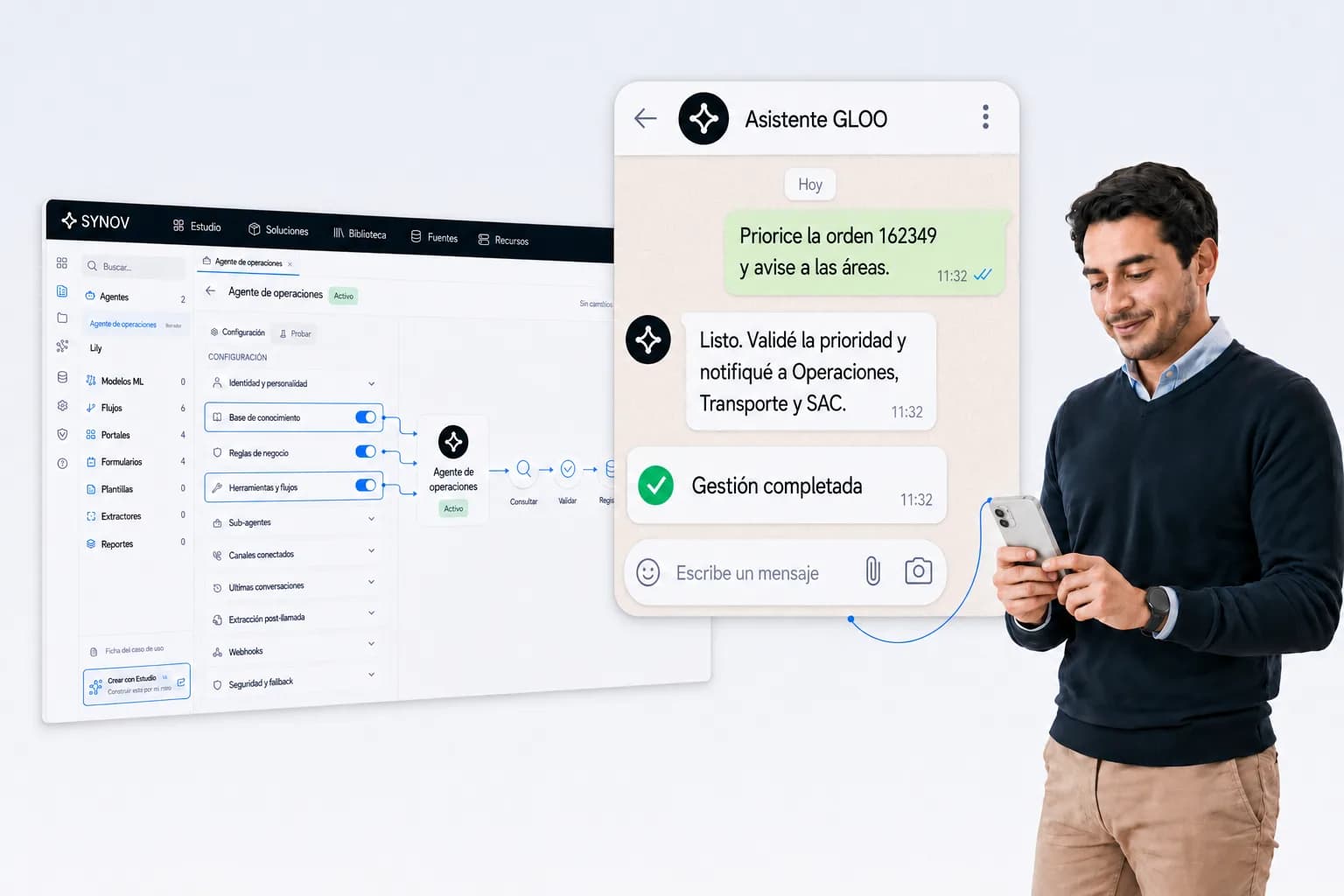
A critical dispatch. Gloo follows it through closure.

Today, a critical dispatch means checking systems and chasing confirmations. The owner defines what Gloo should monitor; the platform follows it through closure.

  1. 01

    Define the follow-up

    The owner specifies the operation, deadline and condition that requires a response.

  2. 02

    Check the sources

    Gloo reads authorized changes in the TMS, WMS or ERP and retains the context.

  3. 03

    Contact and escalate

    When the condition occurs, it alerts the owner; if they do not respond, it follows the defined escalation path.

  4. 04

    Close with evidence

    Events, messages, decisions and closure stay in one history.

Explore active monitoring
Supervisor in a green safety vest checks a tablet at the dock while a truck is loaded

Applied analytics

Your team knows the operation. Gloo helps them model it.

The people who know the process ask the questions. Gloo brings the data together, lets them explore scenarios and explains the results so they can decide without coding or advanced statistics.

Build the view

Use a low-code visual builder to drag components into interactive dashboards and pages connected to your databases or external sources.

Model the operation

Use Python and statistical libraries to calculate costs, simulate scenarios and create tailored visualizations.

Understand the next move

Agents with language models point out patterns in those analyses, explain the results and help teams assess decisions using their operational knowledge.

01 / Interactive model

3D distribution center

Illustrative data
1,000 items / 2,800 modeled locations

Open the model to compare scenarios and see how an agent interprets the data and suggests decisions.

02 / Interactive model · fictional data

Picking and replenishment

Simulate order lines, capacity per pick face and reserve-to-pick visits. The model gives fast-moving items more faces when doing so reduces visits without exceeding rack capacity.

Replenishment visits per shift

142 → 38

Partial view · 4 of 8 modules

Fast-movingOther itemsEmpty

Questions you can answer

Analysis that shows where to intervene.

01

Cost by process

Which activity or resource drives cost and where to intervene.

02

Productivity and balance

Workload across receiving, picking, packing, dispatch and transfers.

03

Inventory and loss

Turnover, dwell time, shrinkage and obsolescence risk.

04

Slotting and scenarios

Locations, travel distances and 3D layout alternatives.

05

ABC and heat maps

Demand and activity concentration by product or area.

Explore use cases

Use cases

From customer conversations to delivery control.

Explore an ecommerce operation with two agents alongside customer support and logistics monitoring cases. In each one, agents check data, take action and make their work visible.

See all use cases

Case study · Ecommerce

Customer support continues. So does the operation.

Divine connects conversations, orders and deliveries for its two Shopify stores with two agents. One application brings the channels together and gives the team visibility into every case.

View case study
Concept image for Divine: adult woman preparing a swimsuit order for an online purchase

Divine · Panamá · Costa Rica

Concept image created for this case

Choose a process. Design how it should work in Gloo.

We review what starts it, where the data lives, which rules apply, what the agent may do and when a person steps in.

Gloo solutions | Analytics, applications and agents